Enhancing the Role of Youth in Peacebuilding
12 March 2025

Enhancing the Role of Youth in Peacebuilding

By JAIF Management Team

Youth are not only the leaders of tomorrow but also active changemakers today. They are capable of building bridges and fostering understanding, making their role in promoting peace more critical than ever. With approximately 1.2 billion young people aged 15 to 24 worldwide, representing 16% of the global population, the sheer size of this demographic underscores their potential to drive meaningful change. The importance of this potential is also recognized in the United Nations Security Council Resolution 2250, which acknowledges that youth are both vulnerable to potential conflict (globally and in ASEAN) and capable of contributing to building and sustaining peace and security. However, without structured programs and support, this potential often goes untapped.
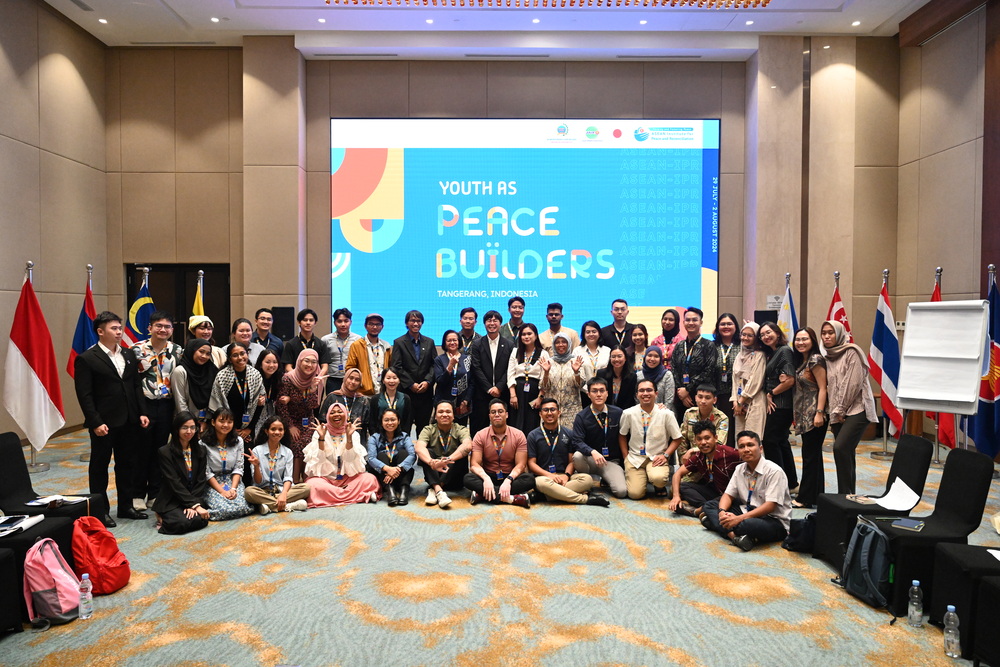

© The ASEAN Institute for Peace and Reconciliation (ASEAN-IPR)

Recognising the importance of empowering youth, the ASEAN-IPR Training: Enhancing the Role of Youth in Peacebuilding took place from 29 July to 2 August 2024, in Indonesia. The programme brought together 34 passionate young leaders from the ASEAN Member States, Timor-Leste, and Japan, providing them with valuable insights into conflict dynamics and peacebuilding strategies.

2.jpg
© ASEAN-IPR

The training featured Youth Expert Panels, interactive sessions, group tasks, and a field study. Participants, who came from diverse backgrounds including government and non-government sectors, fresh graduates, academics, and youth peacebuilders, explored themes like Women, Peace and Security (WPS), peacebuilding, conflict management, and advocacy through role-plays and group exercises, fostering collaboration and practical application of knowledge. Here are some inspiring voices from the training:

Sophamonyoudom, Ministry of Foreign Affairs and International Cooperation, Cambodia

3.jpgRepresenting his team from Cambodia, Sophamonyoudom delivered a presentation on their action plan, ‘Peace 101.’
© ASEAN-IPR

Sophamonyoudom encourages fellow youth to “claim your youth identity and make full use of your potential in collaboration with others for peace and prosperity.”

Alongside two other participants from Cambodia, he developed an action plan called “Peace 101,” which aims to promote peace education among youth. This initiative introduces concepts, principles, and skills of peace while fostering peace-oriented values. The team also proposed creating a youth-targeted app to further these objectives.

As highlighted in the article developed during peacebuilding training sessions, enhancing youth capacity is a core focus of the ASEAN Work Plan on Youth 2021–2025. The article emphasizes the need to equip youth with 21st century skills to drive impactful change through volunteerism and localizing the Sustainable Development Goals (SDGs) within their communities. By training youth in project development, management, pitching, and fundraising, they can transform their ideas and aspirations into actionable plans that positively impact their communities.

Chihiro Arima, Reach Alternatives (Non-Profit Organization), Japan 

4.jpg
Chihiro shared her insights and contributed to the discussion.
© ASEAN-IPR

Throughout the training, Chihiro reflected on the unique vulnerabilities and strengths of youth. While economic challenges may leave young people susceptible to negative influences, such as joining criminal groups, these vulnerabilities also give them a deep awareness of their own issues and needs. This awareness, combined with their ability to empathize with others in similar situations, positions youth as powerful agents of change in addressing the root causes of violence and fostering peace.

“This training provided a precious opportunity for me to broaden my views of what conflict is, how we can transform conflicts from negativity to positivity, and what we can and what we need to do as youth and peacebuilders through exchanging ideas with participants from diverse backgrounds,” Chihiro shared.

In Japan, low youth voter turnout remains a critical issue, often linked to a lack of awareness, distrust in politicians, and the perception that voting doesn’t drive change. “In a group exercise, therefore, we explored the underlying causes of this issue and found that factors such as a lack of awareness and knowledge about politics, the belief that votes would not bring about change, and distrust in politicians, contribute significantly to low voting rates among youth,” said Chihiro, who developed an action plan to address this issue.

Chihiro’s action plan, “Voices for Tomorrow”, aims to enhance youth participation in policy making through a three-year pilot programme in Tokyo high schools. By addressing low youth voter turnout and limited engagement in policy making, the programme aspires to equip young people with the knowledge and skills needed to influence governance processes effectively and provide a platform for youth to build a dialogue with the policymakers.

Ephol T. Calandria, Office of the Presidential Adviser on Peace, Reconciliation, and Unity, Philippines

5.jpg
Ephol delivered a presentation during the training session.
© ASEAN-IPR

“The training, in some way, laid the foundation of peacebuilding, which is relationship building” Ephol said. “I really admire the training because it took meto lots of eureka moments. I especially admired Professor Akiko’s statement that the result of what we’re doing is to produce real happy people. It’s a simple statement, yet very powerful and insightful. I am hoping that all my fellow young peacebuilders will continue working for peace. It is not easy but in time our efforts will matter,” he candidly shared.

Ephol’s team presented “Empowerment, Recovery, and Rehabilitation Initiatives for Victims of Terrorism and Conflicts (VoTCs)” in the Bangsamoro Autonomous Region of Muslim Mindanao. This initiative aims to support youth, women, and children in armed conflict zones through social healing, recovery, and rehabilitation. It involves community engagements, addressing local grievances, and organizing an inclusive body of VoTCs which acknowledged by all stakeholders.

Celina Soares Franklin, Timor Leste Youth Parliament, Timor-Leste

6 screenshot from YT video.png
Celina, one of three participants from Timor-Leste actively contributed to the discussions.
© ASEAN-IPR

“The most interesting part of this training was learning about conflict resolution. It is highly relevant to Timor-Leste’s situation, as there is no development without peace. Using non-violent action to resolve conflict is essential,” Celina said.

Celina and her team presented “Path to Peace”, a project aimed at ensuring the rights of Children Born of War (CBW) and youth are respected by both the state and society. Through peacebuilding efforts, community agreements, and sustained collaboration, the project seeks to create a supportive environment for these vulnerable groups.

Participants discussed the challenges they face that often discourage them from becoming active peacebuilders. They also shared ideas for promoting meaningful youth participation in peacebuilding. Among their suggestions were fostering stronger collaboration between governments and youth, as well as addressing the root causes of their limited youth involvement, such as poverty and unequal access to education and resources.


The ASEAN-IPR Training: Enhancing the Role of Youth in Peacebuilding successfully fostered collaboration, critical thinking, and innovative action plans among participants. By empowering youth leaders with the tools and knowledge to advocate for peace, the training planted seeds for long-term regional stability and prosperity. The stories of these young changemakers highlight the immense potential of youth to transform societies and build a culture of peace.

To explore the highlights of the training, click here . For further insights on participants’ views about the role of youth in peacebuilding, you can explore the Compiled Articles: ASEAN IPR Training on Enhancing the Role of Youth in Peacebuilding. These articles were prepared based on the participants’ creativity and views alone and did not represent the views of their respective countries.


Sectors

Human Rights

Funding Framework

JAIF 2.0

Related Beneficiaries' Voice

ASEAN enhances regional solidarity through the ASEAN-ERAT Programme

ASEAN enhances regional solidarity through the ASEAN-ERAT Programme

Southeast Asia is the home of some catastrophic natural disasters causing great loss of life, social and economic disruptions, and environmental damages. Being one of the most disaster-prone regions in the world, ASEAN places importance on strengthening the capacity for a fast, collective, and reliable regional response. One of the flagship programmes in this endeavor is the ASEAN-Emergency Response and Assessment Team (ASEAN-ERAT) programme. The programme enhances ASEAN’s capacity to rapidly deploy an ASEAN-ERAT team to affected ASEAN Member States during the first phase of a disaster emergency.
23 December 2023
Mainstreaming the Rights of Persons with Disabilities with Gender Perspectives in ASEAN

Mainstreaming the Rights of Persons with Disabilities with Gender Perspectives in ASEAN

Various efforts have been made in recent years to promote the rights and equal opportunities of persons with disabilities and improve policies and regulations in all spheres of a people-centered and people-oriented ASEAN Community. One of them is the ASEAN Intergovernmental Commission on Human Rights (AICHR) Regional Dialogues on the Mainstreaming of the Rights of Persons with Disabilities in the ASEAN Community, which have been implemented with the support from the Government of Japan through the Japan-ASEAN Integration Fund (JAIF) and other dialogue partners. The AICHR Regional Dialogues have been conducted since 2015 with the most recent Dialogue held in December 2021. Discussions at the Regional Dialogues contributed to the development and implementation of the ASEAN Enabling Masterplan 2025: Mainstreaming the Rights of Persons with Disabilities adopted at the 33rd ASEAN Summit in 2018. Dr. Arunee Limmanee from Thailand and Ms. Metta Thippawong from Lao PDR are the participants in the 2019 AICHR Regional Dialogue on the Mainstreaming of the Rights of Persons with Disabilities in the ASEAN Community (Gender Perspectives on Disability Rights) who shared their experiences from the Dialogue, the current status of human rights of persons with disabilities in their respective countries, and their hopes for the future. Arunee Limmanee, Deputy Dean of the Faculty of Social Administration at Thammasat University, also serves as Advisor to the Association of the Physically Handicapped of Thailand (APHT) and the Chair of the Department of Children, Youth and Women with Disabilities at Disabilities Thailand (DTH). Being physically disabled herself, she has been volunteering as an advocate for access to transportation for people with disabilities since her student days. After obtaining her master’s degree in social work in the United States, she became a staff member of the APHT, promoting human rights of persons with disabilities on a daily basis by helping the mobility impaired, physically disabled, especially social minorities, and people with special needs. At the 2019 AICHR Regional Dialogue, where gender perspectives in the rights of persons with disabilities were the main theme, over 120 people from different sectors participated, including policy makers, government officials, law enforcement agencies, private companies, academics, and other partners. Over the course of three days, the participants discussed the topics of women with disabilities and political rights, gender perspectives and justice system, disaster preparedness and management for women and girls with disabilities, inclusive education for women and girls with disabilities, and mainstreaming gender and disability rights in business. Looking back on the Dialogue, Arunee says that the opportunity to meet with the stakeholders from diverse sectors in ASEAN countries to share their experiences once a year is invaluable in getting new ideas. “When hearing about disabilities, many people turn their attention to ministries and agencies related to social welfare, but the issue of people with disabilities is not limited to social welfare and medical care but affects all sectors, such as business, politics, education, and labour.” She points out that this fact is often overlooked in the eyes of people without disabilities. The Dialogue brought together experts from a wide range of fields and featured interesting discussions from different perspectives that are not often in the spotlight, such as disaster preparedness and management. The Thai Government has adopted and implemented a number of laws, regulations, and policies for persons with disabilities, including the ratification of the Convention on the Rights of Persons with Disabilities (CRPD) in 2006. However, there are gaps in the implementation of these laws and policies, Arunee explains. For example, there is a government service where people can seek rehabilitation and treatments free of charge. However, people with disabilities living in rural areas have to sacrifice their daily incomes to travel to service centres in the city where they can receive treatments. APHT provides wheelchairs to children with mobility impairments. However, the support does not help as initially expected. Schools are not accessible by wheelchair because they are located too far from their homes and the roads are not paved. She points out that there are tremendous gaps in available services and information, especially between urban and rural areas. The biggest problem, according to Arunee, is that women with disabilities are hardly involved in policy and decision-making processes in Thailand and there are no women with disabilities in the parliament. Because of their disabilities and they are female, they face double discriminations. There are more obstacles for women and girls with disabilities living in rural areas. “The quickest way to help these people is for a member of parliament representing women with disabilities to speak directly to policy makers,” she claims. “It is high time that we defend our own rights instead of relying on others.” Arunee stood for an election to the Upper House, passed the local and national elections, but was defeated in the final selection by the Election Commission. Her challenge continues to deliver the voices of women with disabilities to the parliament.
18 January 2022
ASEAN Cities Towards Urban Sustainability

ASEAN Cities Towards Urban Sustainability

Cities play an important role in the development of nations. They serve not only as hubs for economic and political activities, but also as centers of cultural interactions among its populace. Home to some of the fastest growing cities, the ASEAN region, like the rest of the world, also faces the challenge of balancing the economic benefits of urbanization and the environmental costs that go with it. In recent years, ASEAN has undertaken humble steps to address this challenge. It recognizes that a collaborative, integrated, and innovative approach is key to promote the development of ASEAN environmentally sustainable cities (ESC). Through the ASEAN ESC Model Cities Programme, a network of 40 ASEAN cities has embarked on a shared journey towards urban sustainability at the local level. Encouraging milestones were reached from the ESC pilot projects as seen from the stories of Da Nang in Viet Nam and Luang Prabang in Lao PDR. Da Nang’s environmentally friendly residential areas   Da Nang, a coastal city, is one of Viet Nam’s famous tourist destinations. Recently, the city took pride in hosting the 6th Global Environment Facility Assembly in 2018 and the Asia-Pacific Economic Cooperation Summit in 2017. Such opportunities that have put the city in the international stage are encouraging for Da Nang to further step up its efforts to make the city an environmentally friendly city. From 2011 to 2015, the city participated in the ASEAN ESC Model Cities Programme. Its pilot project was on environmentally friendly residential areas. Through the ASEAN ESC Model Cities Programme, Da Nang established three models of environmentally friendly residential areas: 1) Chinh Gian Ward (Thanh Khe District), 2) Hoa An Ward (Cam Le District), and 3) Thai Lai Village in Hoa Nhon Ward (Hoa Vang District). “Like other rapidly developing cities in Viet Nam, Da Nang was facing a solid waste problem, in particular in suburban areas. Littering, low collection rate, and unsegregated waste were common practices, due to the community’s limited awareness,” said Nguyen Thi Thu Ha, Deputy Head of Da Nang Department of Natural Resources and Environment. Nguyen Thi Thu Ha shared that she was most proud when her office visited Chinh Gian Ward sometime after the assistance to the pilot project finished. She witnessed huge improvement in the residential area’s waste segregation and waste collection practices. “We hardly saw any litters on the streets,” she added. Instead of comprehensive yet complicated rules, the community introduced simple, practical rules that are unlikely to confuse and be resisted by the majority of residents who are not used to waste segregation. As these rules were agreed upon and enforced by the community members, they took effect quickly. For example, the pilot areas only separated wastes into 1) ‘recyclable’ waste with market value and 2) ‘all other wastes’, which must be placed in properly designated areas, instead of segregating them into at least 4-5 (or more) categories as is done in advanced countries.
31 January 2019