
By JAIF Management Team
Southeast Asia is the home of some catastrophic natural disasters causing great loss of life, social and economic disruptions, and environmental damages. Being one of the most disaster-prone regions in the world, ASEAN places importance on strengthening the capacity for a fast, collective, and reliable regional response. One of the flagship programmes in this endeavor is the ASEAN-Emergency Response and Assessment Team (ASEAN-ERAT) programme. The programme enhances ASEAN’s capacity to rapidly deploy an ASEAN-ERAT team to affected ASEAN Member States during the first phase of a disaster emergency.
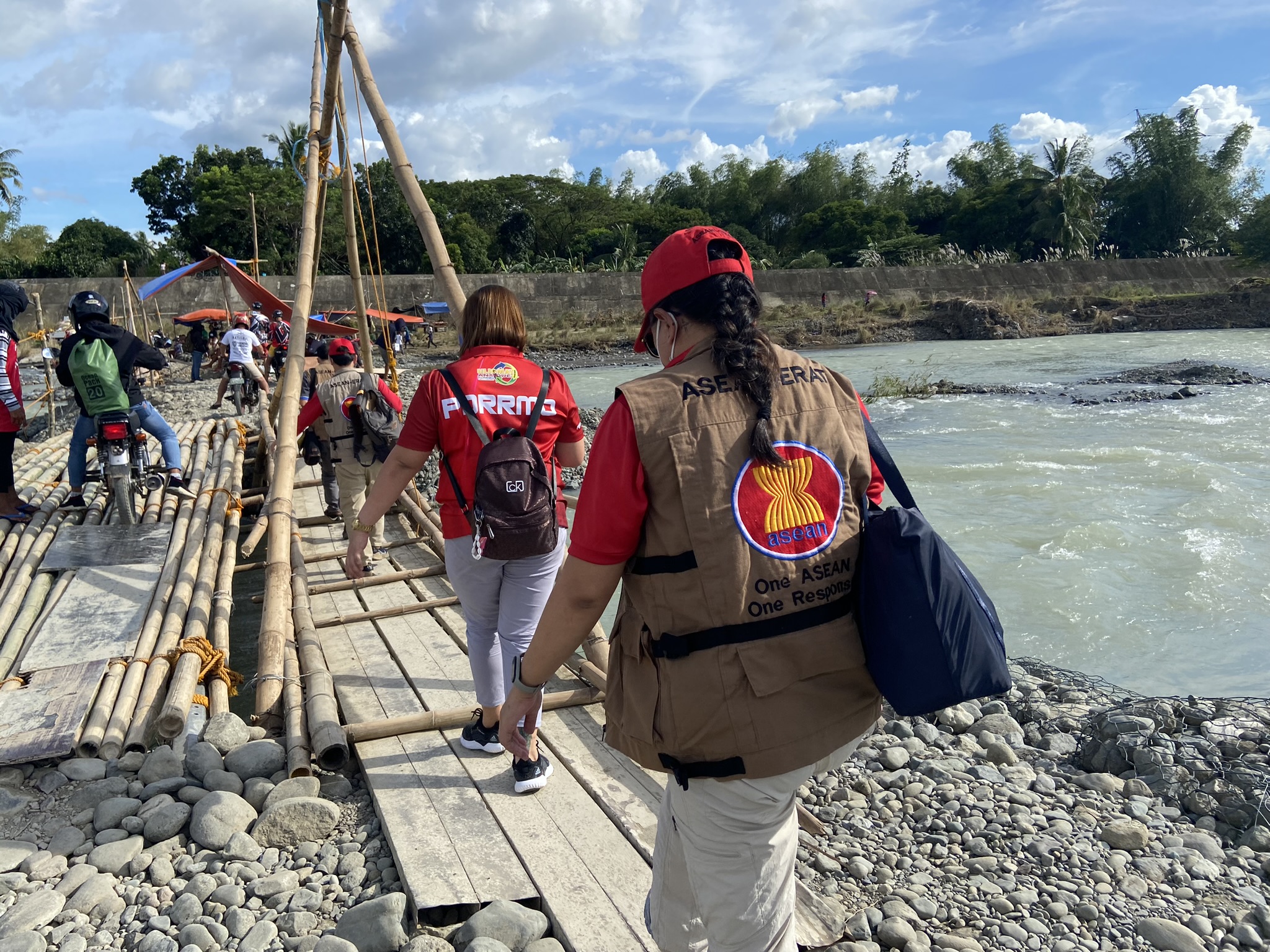
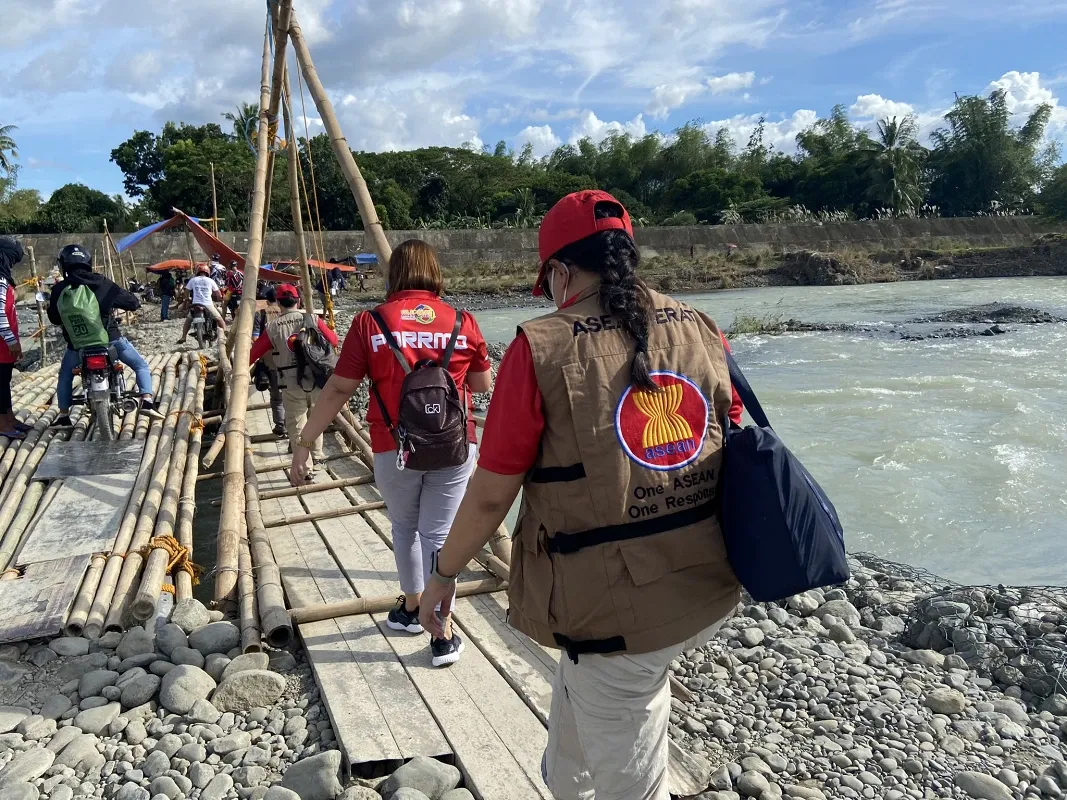
The deployment of ASEAN-ERAT to Typhoon Nalgae in the Philippines in 2022
© AHA Centre
Facilitated by the ASEAN Coordinating Centre for Humanitarian Assistance on disaster management (AHA Centre), ASEAN-ERAT members are required to complete 100 hours of specialized coursework which includes disaster simulation exercises at national and regional levels. To date, 384 first responders across the region have been trained through the ASEAN-ERAT programme, of which 127 were further trained in ASEAN-ERAT Advanced courses. Angelito, Nora, and Afiqah are three passionate ASEAN-ERAT-trained experts who shared with JMT their remarkable experiences during the training and deployments.
Mr. Angelito R. Casinillo, Head of Policy Development and Planning, the Office of Civil Defense of the Philippines
Angelito, who completed the ASEAN-ERAT Level Induction Course in 2014, recalled his experience during his last deployment to the southern region of the Philippines in response to Tropical Storm Nalgae in November 2022. He said, “ASEAN-ERAT members are trained to work fast and to be reliable. Once we arrived in the affected areas, we immediately conducted an assessment and a focus group discussion to identify the immediate needs of the National Disaster Management Office.” He recalled how he felt after completing his deployment mission. “I was very proud because only within two days after the disaster, the team was able to deliver the needs to the affected areas.”
 Angelito (left) and other ASEAN-ERAT members conducted a needs assessment with the victims of Tropical Storm Nalgae in November 2022.
© Angelito R. Casinillo
Having been deployed twice as an in-country ERAT member, Angelito still finds the refresher courses he attended in 2019 and 2023 relevant. “The refresher courses allowed me to not only review the updated ASEAN-ERAT Guidelines but also exchange information with fellow ASEAN-ERAT members.”
Ms. Hjh Nora binti Hj Md Yusof, Head of Emergency Medical Ambulance Services, Ministry of Health, Brunei Darussalam
“I consider myself to be lucky and able to join the first batch of the ASEAN-ERAT programme,” said Nora who has already completed a level 2 ERAT course in civil-military coordination. As an active member of the project steering committee of the ASEAN-ERAT as well as the ASEAN-ERAT Advisory Board, she also emphasized the importance of the programme, which is to maintain regional standards. “To have standardisation, we must be united through what JAIF is doing under the ASEAN-ERAT programme. JAIF unites all ASEAN Member States and creates first responders who are certified and able to work in other countries.”
 Nora (middle) attended the ASEAN-ERAT Refresher Course in July 2023 to update and strengthen her understanding of ASEAN and international mechanisms and services for disaster response.
© AHA Centre
Nora noted the importance of the ASEAN-ERAT Guidelines, which are accessible online. She said, “The guidelines serve as a primary reference for the ASEAN-ERAT members before and during the deployment, while also standardising the procedures that the ASEAN-ERAT members have to follow”.
Siti Nur Afiqah Binti Mohamed Musthafa, Diplomatic Officer, Public Service Department of Malaysia
Afiqah attended the AHA Centre Executive (ACE) Programme in 2022 where she completed the ASEAN-ERAT Induction Course. “It’s an eye-opening experience for me. The ASEAN-ERAT programme is a great programme because we learned the mechanism to work with other agencies, both international and local”. She continued, “I was able to meet different people from the ASEAN Member States and the United Nations Disaster Assessment and Coordination (UNDAC). The programme allowed us to create connections with other first responders, which in my opinion, is a great investment for the future”. “It allowed us to build trust and stronger relationships between the Member States that will eventually accelerate ASEAN’s collective response to disasters across the region,” she added.
 Afiqah (middle) during the ASEAN-ERAT Refresher Course in July 2023.
© AHA Centre
Even though she has been recently transferred to the Public Service Department after spending five years with the National Disaster Management Agency (NADMA) Malaysia, Afiqah still has a big passion for disaster management. “I am planning to take the Level 2 Advanced Course on Early Recovery”. She further added, “Greater women’s participation in disaster recovery programmes is important. It encourages me to get involved more in the disaster response and recovery stages”. She continued, “It is imperative to advocate attention to gender issues as men and women may have different needs after disasters. But in most cases, women are not effectively represented in the responses and recovery stages”.
As the frequency and magnitude of natural disasters increase around the world, the enhancement and strengthening of the capacity of the ASEAN-ERAT members is becoming even more important. In addition to their professional skills obtained from the training and deployments, it is expected that the ASEAN-ERAT members will lead the capacity building of their local National Disaster Management Organisations (NDMOs) so that each country can take its own initiative and quickly respond to future disasters.
Japan’s unwavering commitment to building a resilient ASEAN Community is reflected in recurring projects supported by the Japan-ASEAN Integration Fund (JAIF) since 2014. The third phase of the project “Strengthening the Capacity of the ASEAN Emergency Response and Assessment Team (ASEAN-ERAT)” is currently ongoing and will continue until 2025.
Sectors
Funding Framework
Related Beneficiaries' Voice
Towards Disaster-resilient ASEAN Communities – Impact Stories from ASEAN DRR-CCA
 28 November 2022
ASEAN Strengthens the ASEAN Heritage Parks Programme through Capacity Building and Information Development
29 June 2020
ASEAN Prepares Future Leaders on Disaster Management
01 July 2018